EDUCATION REPORTS
in-depth explorations of education topics
Education reports are larger research projects, often evaluating programs and highlighting the results. Here you'll find in-depth description of the data being collected, methods of analysis, previous findings from similar research, and extensive discussion of the results.
We strive to put results in context and understand how they affect Missouri schools and students.
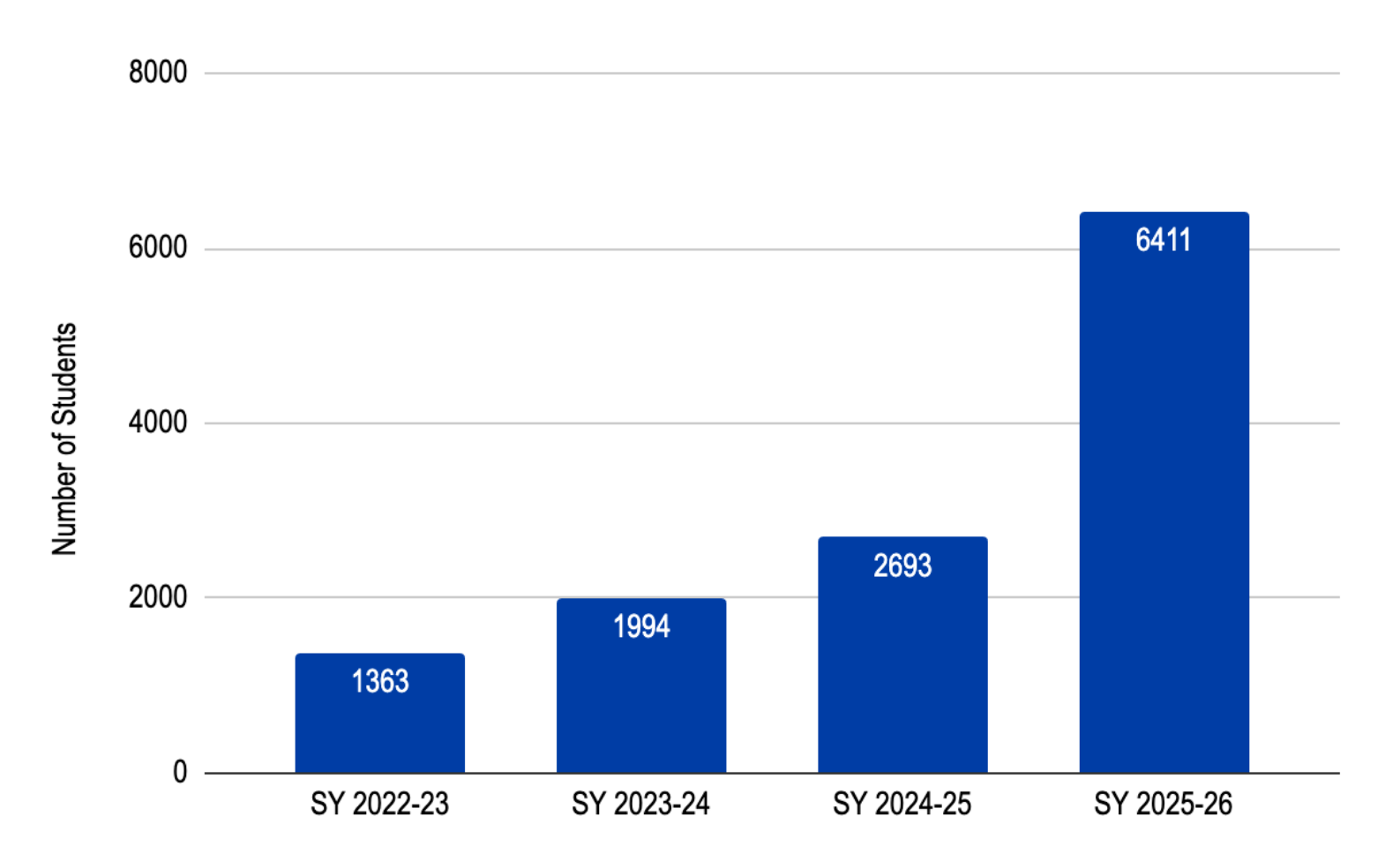
MOScholars is Missouri’s education savings account (ESA) scholarship program, designed to expand access to educational opportunities for eligible students, primarily those with disabilities or from low-income households, through scholarships administered by approved Educational Assistance Organizations (EAOs). These scholarships can be used for tuition, tutoring, therapies, curriculum, and a range of other educational expenses. This report provides a four-year overview of participating student demographics in Missouri’s MOScholars program. The analysis focuses on gender, race/ethnicity, grade level, and Individualized Education Plan (IEP) status for MOScholars students overall and disaggregated by EAO. This report was prepared by the PRiME Center at Saint Louis University for the Missouri State Treasurer’s Office
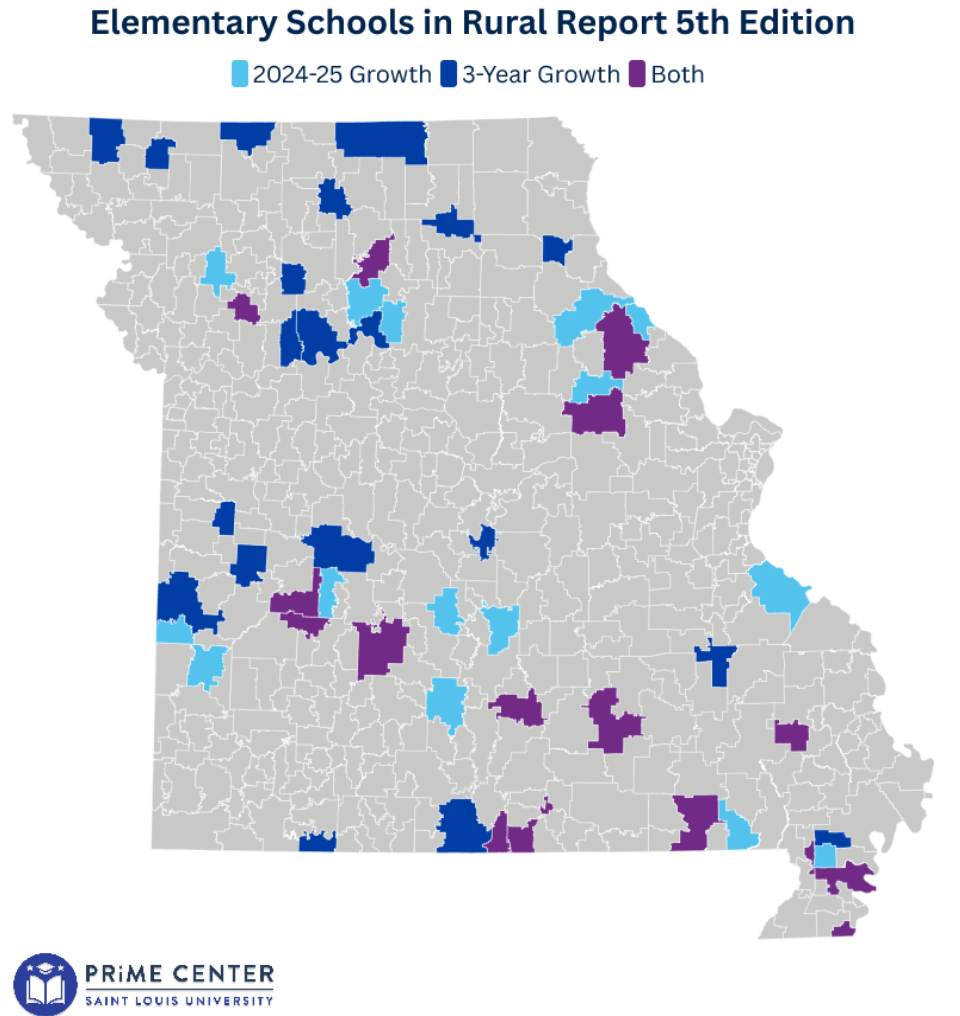
In this special report, the PRiME Center identifies, recognizes, and celebrates the highest performing schools in the state’s most rural communities. Rather than rank schools according to standardized test scores, the PRiME Center’s popular Growth reports illustrate how much students grew over time. By this standard, we can recognize the most effective schools in the state – the ones that help students achieve the most over a set period of time.
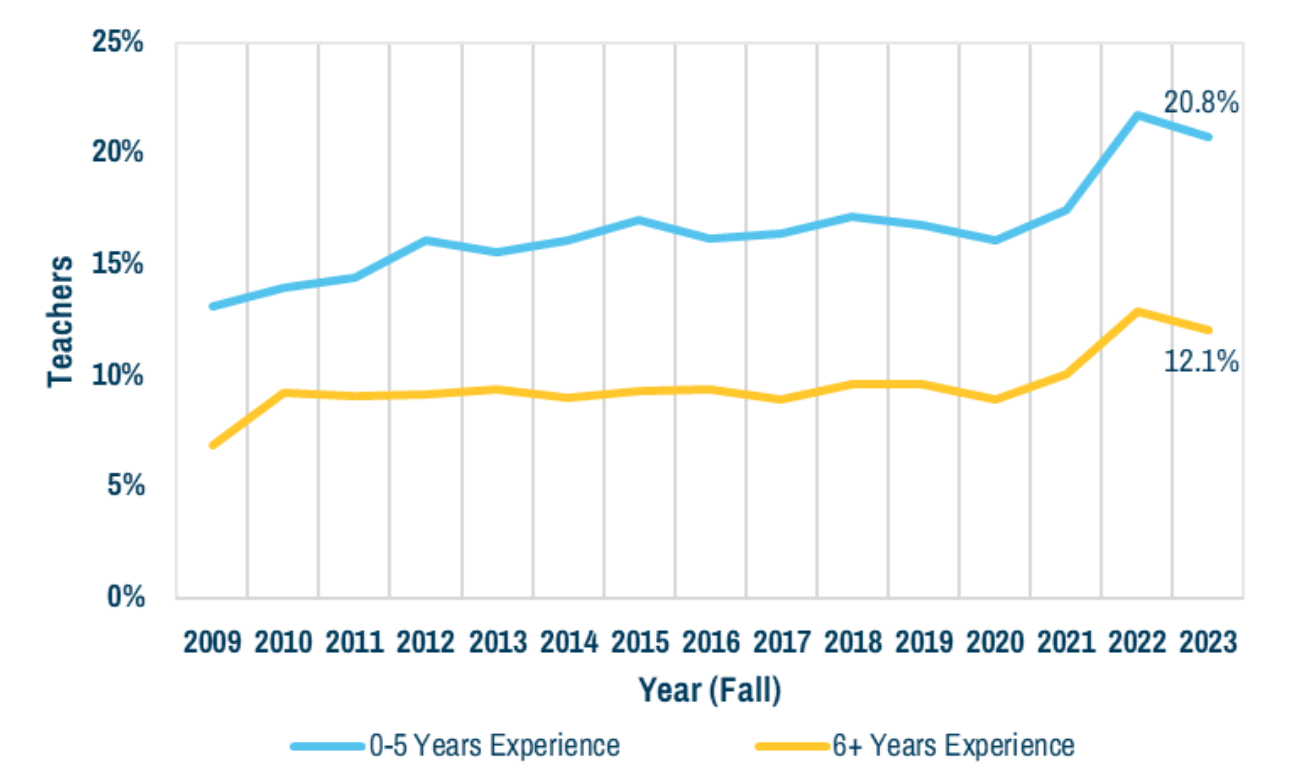
Missouri’s teacher mobility is highest among its early-career teachers, especially those in their first five years of teaching in the state’s public schools. In 2023–24, more than one in five early-career teachers departed their school districts or Missouri public education altogether, modestly less than the pandemic-era high the year prior but substantially higher than long-term trends. The most recent cohorts of new, early-career teachers are leaving Missouri public schools faster than earlier cohorts, placing additional strain on the capacities of teacher preparation programs across the state to produce an increasing number of new teachers. To improve teacher turnover and address chronic teacher shortages in the subject matters and school contexts in which they occur, increased focus should be devoted to early-career teachers through new policy reforms and school labor practices.
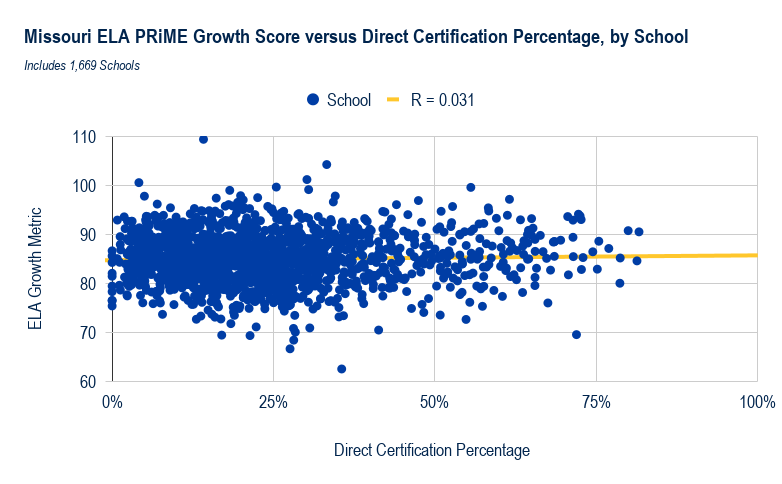
The data show that some of the highest growth schools in Missouri also enroll some of the highest percentages of low-income students. Recognizing, rewarding and replicating the successes of these schools is the best path to improving outcomes for the state’s most vulnerable students.
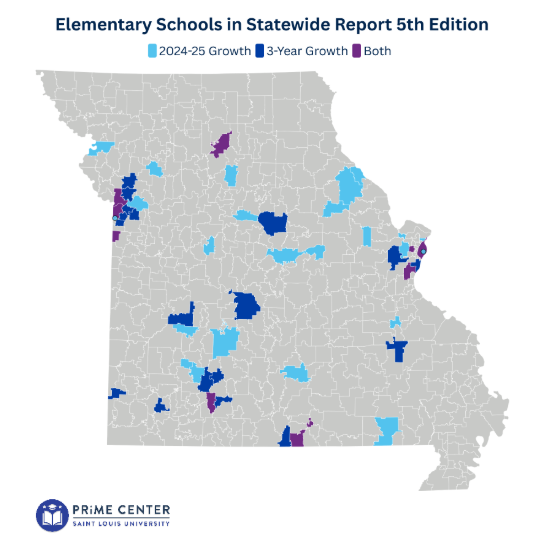
Instead of simply comparing Missouri Assessment Program (MAP) scale scores year to year to track growth, experts advocate using statistical models which examine the relationship between the previous year’s score and the current year’s scores. Because standardized test scores often reflect factors outside schools’ control, student growth is a fairer measure of how well schools are doing at promoting student learning. This report communicates both 2025 growth scores and, to give a more stable picture of growth, three-year average growth scores for each of the highest-scoring schools across the state .
The Saint Louis University (SLU) Billiken Teacher Corps (BTC) offers two pathways for current and aspiring Catholic school educators to earn their Master of Arts in Teaching (MAT) and certification (if needed): Cura Community and MAT Magis.
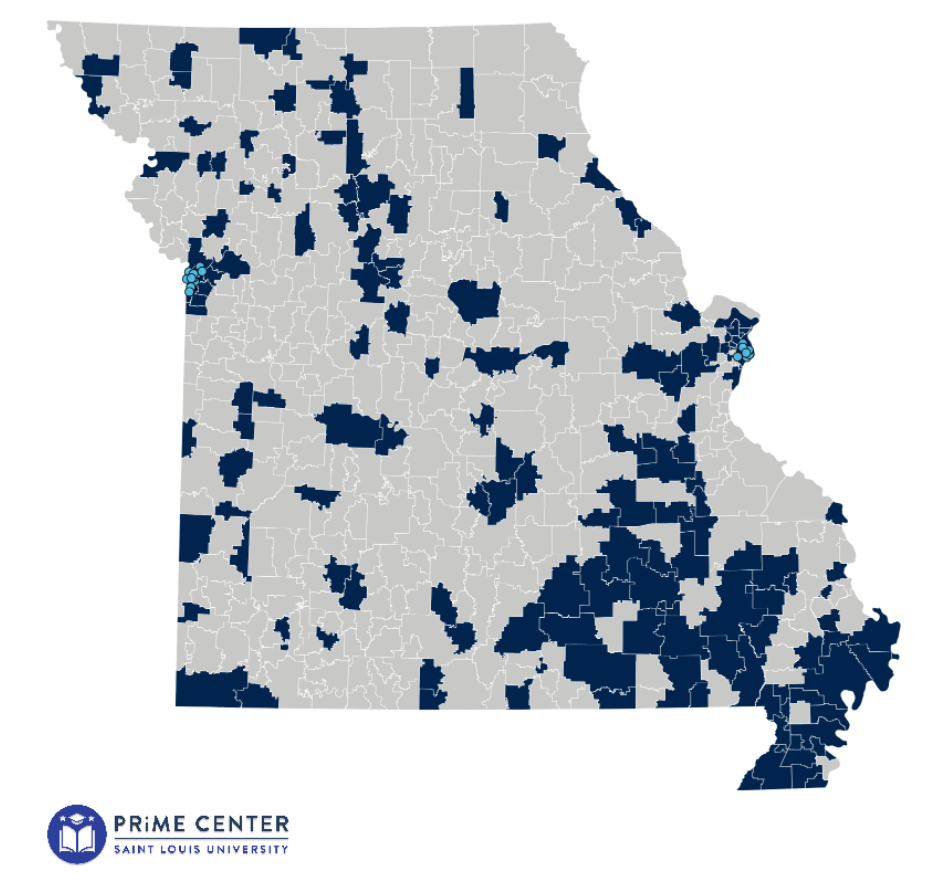
This report examines the effect integration had on the Black teacher workforce in Missouri from 1954–1970. We outline how Black teachers were displaced in the seventeen southern and border states as these states moved toward compliance with Brown. We present data on the displacement of Black teachers in these seventeen states—with a focus on Missouri. Our report concludes with an analysis of trends in the student-teacher racial parity index in Missouri and implications for policymakers about how this history connects to the contemporary status of student-teacher demographics in Missouri public schools.
Abstract: When looking at the actual impact that schools are having on student learning, it is vital to look at student growth. This is especially important for schools that enroll high percentages of low-income students. Opposite of growth are single point-in-time measures such as proficiency, which do not adjust for where students start the year. Missouri has the best growth model in the country. This report combines three years of growth data, and then looks at the quartile of Missouri schools enrolling the highest percentage of low-income students. The data show that some of the highest growth schools in Missouri also enroll some of the highest percentages of low-income students. Recognizing, rewarding and replicating the successes of these schools is the best path to improving outcomes for the state’s most vulnerable students.
This 1st Edition of PRiME’s Missouri Three Year Statewide Growth Report which covers data from the 2021-22 and 2023-24 school years.
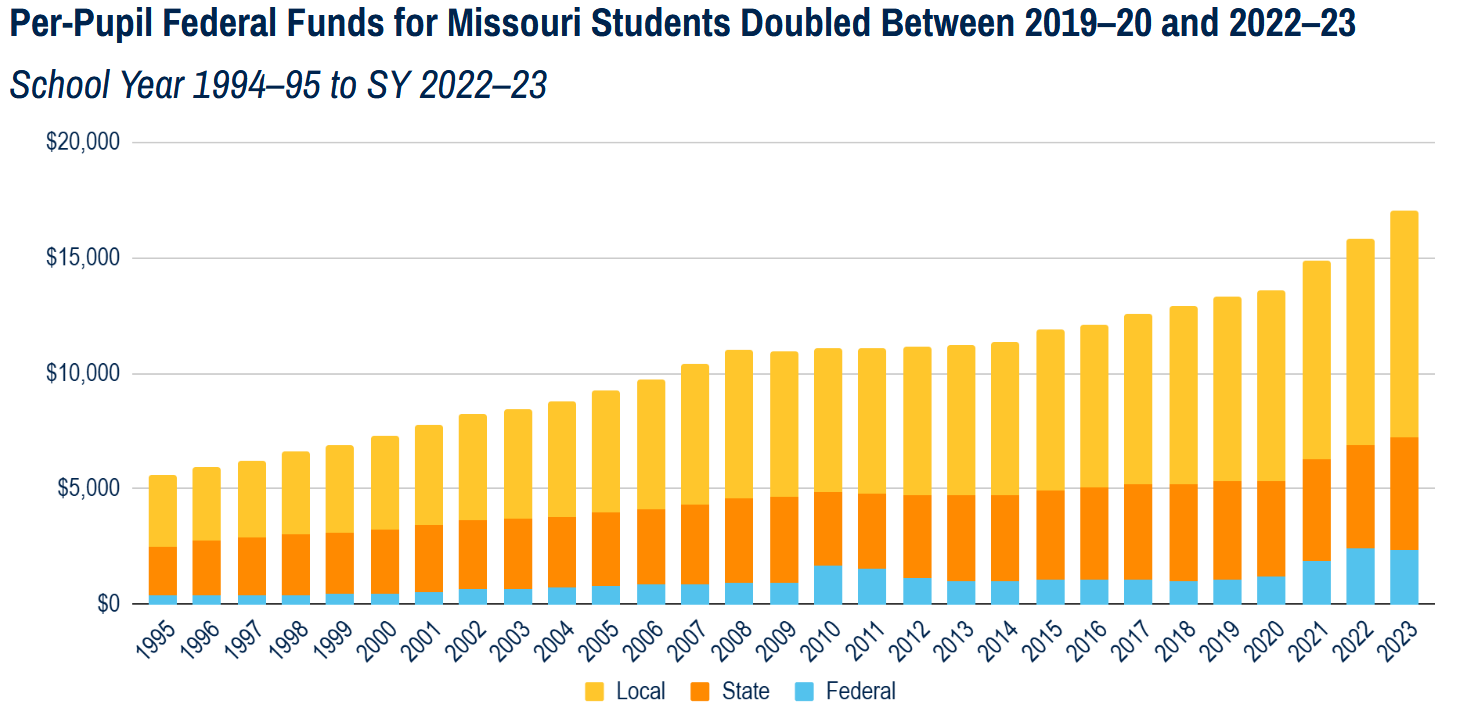
This PRiMER on Missouri public school funding explains revenue sources, trends, formula mechanics, district expenditures, protections against enrollment decline, and fiscal reserves to provide a clear foundation for understanding Missouri’s school finance system. Over time, average per-pupil funding has risen substantially in real terms, though Missouri remains below the national average while aligning more closely with its neighboring states. Despite this equalization mechanism, wide variation in spending exists across districts, with evidence suggesting some regressive elements that benefit wealthier areas.